Business hour
Our support available to help you 24 hours a day, seven days a week.
Monday-Friday: 9am to 5pm
Saturday: 10am to 2pm
Sunday: Closed
Monday-Friday: 9am to 5pm
Saturday: 10am to 2pm
Sunday: Closed

A story by Nina Begesh, a communications and administration professional and a holder of the Hungarian Diaspora Scholarship. Nina is of Hungarian origin on her father’s side and she has been living in Hungary since 2023. She strongly identifies with Hungarian culture, traditions, and values, and supports the mission of Hungarian communities across borders to preserve cultural identity and build meaningful connections within the global Hungarian network.
Easter in Hungary is one of the most beautiful holidays I have ever experienced. It is not only about traditions, but also about family, atmosphere, and those simple moments that stay in your memory for a long time.
For our family, Easter has become something very special. My husband and I decided that we want to keep and celebrate traditions together. We celebrate both Orthodox and Catholic holidays, and this brings a unique feeling to our home. It allows us to experience more, to understand each other’s backgrounds better, and to create our own family traditions.
In 2026, Catholic Easter is celebrated on April 5, while Orthodox Easter falls on April 12 — only one week apart. This makes the holiday season feel longer and even more meaningful. Last year was especially memorable, because both Orthodox and Catholic Easter were celebrated on the same day. For us, it felt like a moment of unity and shared joy.
Hungarian Easter traditions are truly unique and full of life. One of the most famous customs is “locsolkodás” — when boys and men sprinkle girls with water (or sometimes perfume). It is an old tradition connected to spring, renewal, and good wishes. It may seem unusual at first, but it is actually fun, playful, and full of positive energy.
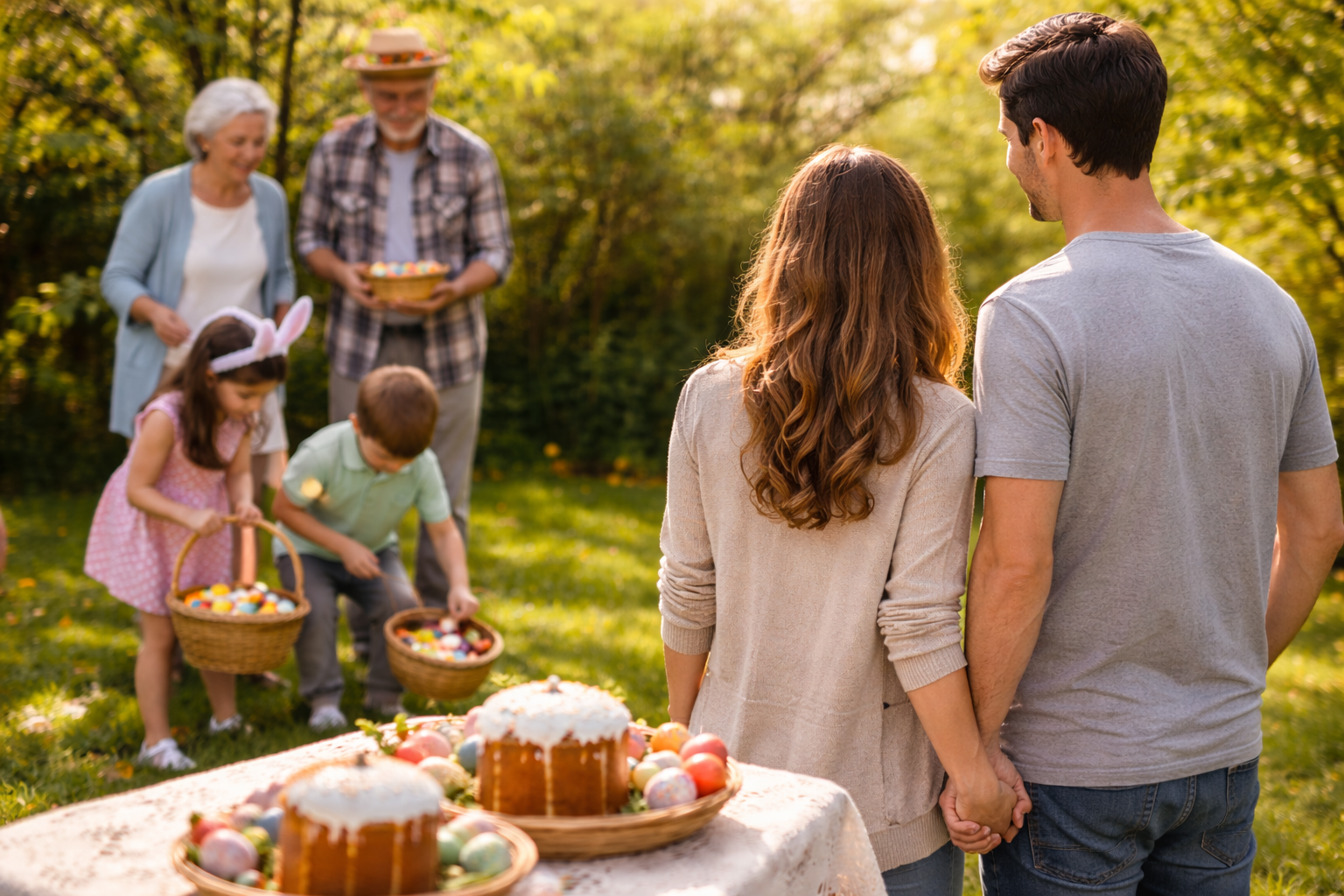
Another tradition I really love is how children search for hidden Easter eggs and little chocolate bunnies in the garden. It creates a magical atmosphere for families, especially for the youngest ones. There is laughter, excitement, and that special feeling of celebration.
At home, we also keep some of our own traditions. We dye Easter eggs together, using different colors and patterns. It is a simple activity, but it brings a lot of warmth and creativity into the holiday.
We also prepare traditional Easter food. For example, we make kulich — a sweet bread similar to a festive cake, usually tall and soft, often decorated with icing. It is a traditional Easter dessert in many Orthodox families and an important part of the festive table.
For me, Easter in Hungary is a perfect combination of cultures, traditions, and family values. It is a time when you slow down, spend time with loved ones, and feel connected — to people, to traditions, and to something deeper.
And maybe that is why this holiday feels so special here.
Begesh Nina